English
  русский
  عربى
عربى 
The WPC Wall Panel Factory has become the core of a manufacturing shift that blends recycled wood fibers with thermoplastics into durable building materials. In 2025, the global wood-plastic composite market reached an estimated value of $8.5 billion, with wall panels accounting for nearly 30 percent of total production. Typical formulations contain 50 to 70 percent reclaimed wood particles and 30 to 50 percent recycled polypropylene, along with stabilizing additives. Without the precision of a dedicated WPC Wall Panel Factory, achieving consistent density and water resistance across thousands of square meters would be impractical. Compared to solid timber, WPC wall panels reduce the use of virgin forest material by up to 65 percent per installed area, making these factories central to green building certifications. The core of their operation lies in extrusion lines that melt and mix materials at temperatures between 170°C and 200°C, followed by cooling calibration tables that lock in thickness tolerances within 0.2 millimeters, ensuring every panel meets structural requirements.
What are the main features of WPC wall panels produced in these factories?
The notable feature is a co-extrusion layer, typically 0.5 to 1.0 millimeter thick, which adds a protective shell that lowers moisture absorption by more than 80 percent compared to uncoated panels. After 24 hours of water immersion, quality tests show absorption rates below 3 percent, while thermal expansion remains at roughly 1.2 percent per 10°C change. Density usually falls between 1.2 and 1.4 grams per cubic centimeter, and flexural strength ranges from 25 to 35 megapascals, sufficient for both interior and exterior walls. The plastic matrix encapsulates wood particles, preventing fungal decay and eliminating the need for chemical treatments. Panel weights of only 3.5 to 5.0 kilograms per square meter make handling easier, while interlocking edges reduce installation time by 25 percent compared to traditional tongue-and-groove wood. Many factories now embed inline sensors to measure these properties continuously, ensuring that every batch meets consistent quality standards without manual intervention.
What are the common application scenarios for WPC wall panels?
Residential builders frequently install them on accent walls and exterior facades, with a five-year maintenance cost study showing a 40 percent reduction compared to painted cedar or pine. Hotels and retail stores choose WPC panels for high-humidity areas like bathrooms and indoor pools, where mold-related complaints drop by roughly 90 percent. Basement finishing has also grown rapidly, as the material does not absorb ground moisture; one regional analysis found that WPC-clad basements lowered dehumidifier energy consumption by 18 percent annually. Agricultural structures such as poultry houses and dairy barns use these panels because they withstand regular pressure washing and chemical disinfectants without swelling or delaminating. In coastal regions where salt air damages natural wood, WPC panels have shown a service life of over 10 years without surface degradation. A contractor survey from 2024 confirmed that WPC wall panels performed well across all these scenarios, with installation crews reporting fewer callbacks for moisture-related issues compared to traditional materials.
What development trends will shape the future of the WPC Wall Panel Factory?
By 2027, industry observers expect that more than half of new factories will adopt closed-loop water systems, cutting freshwater consumption by 35 percent per ton of output. Lightweight foamed formulations are emerging, which can lower panel weight to under 2.8 kilograms per square meter while maintaining screw retention above 800 newtons. Researchers are testing bio-based coupling agents to replace conventional additives, and early data indicates a 12 percent improvement in impact resistance. Digital surface embossing using high-resolution rollers now replicates wood grain patterns with over 95 percent visual accuracy compared to natural oak. Some factories are piloting solar-thermal preheaters for raw materials, reducing extrusion energy by 15 percent without sacrificing throughput. As building codes continue to push for lower carbon footprints, the WPC Wall Panel Factory will evolve from a basic mixer-extruder line into a highly automated, resource-efficient system that prioritizes circular production methods.
The WPC Wall Panel Factory ultimately represents not just a production site, but a practical answer to rising material costs and environmental regulations. Without these factories, the construction industry would face higher waste levels and greater dependence on tropical hardwoods. As building codes continue to push for lower carbon footprints, the WPC Wall Panel Factory will evolve from a basic mixer-extruder line into a highly automated, resource-efficient system. And that is why, from the first extrusion stage to the final quality check, the WPC Wall Panel Factory remains the core of a more circular and responsible way to build.
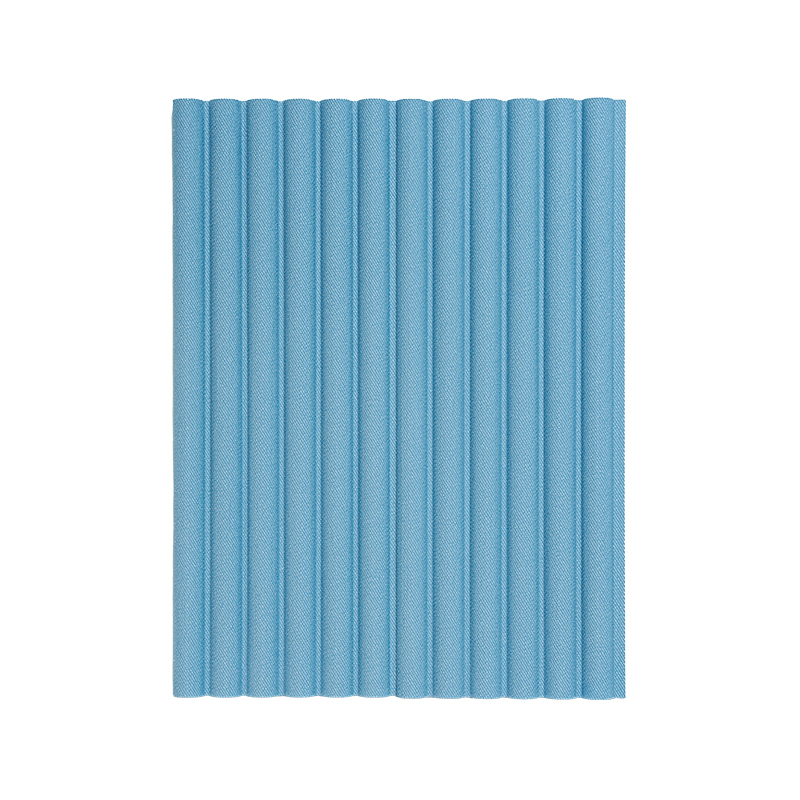
The Elegant Light-blue Vertical Grain WPC Panel for Modern Interiors from Haining Commerce Imp & Exp Co., Ltd. delivers sophisticated styling for contemporary wall applications. Featuring a refined vertical grain pattern in a soft light-blue finish, this panel creates visual height and calm ambiance within residential and commercial spaces. Constructed from durable wood-plastic composite material, it offers outstanding resistance to moisture, fading, and surface wear under normal indoor conditions. The vertical grain design complements modern, coastal, and Scandinavian interior themes. Lightweight construction simplifies installation compared to natural wood panels. Suitable for accent walls, bedrooms, living areas, and office environments, this WPC panel provides lasting aesthetic appeal with small maintenance requirements. Regular dusting preserves the light-blue surface appearance.